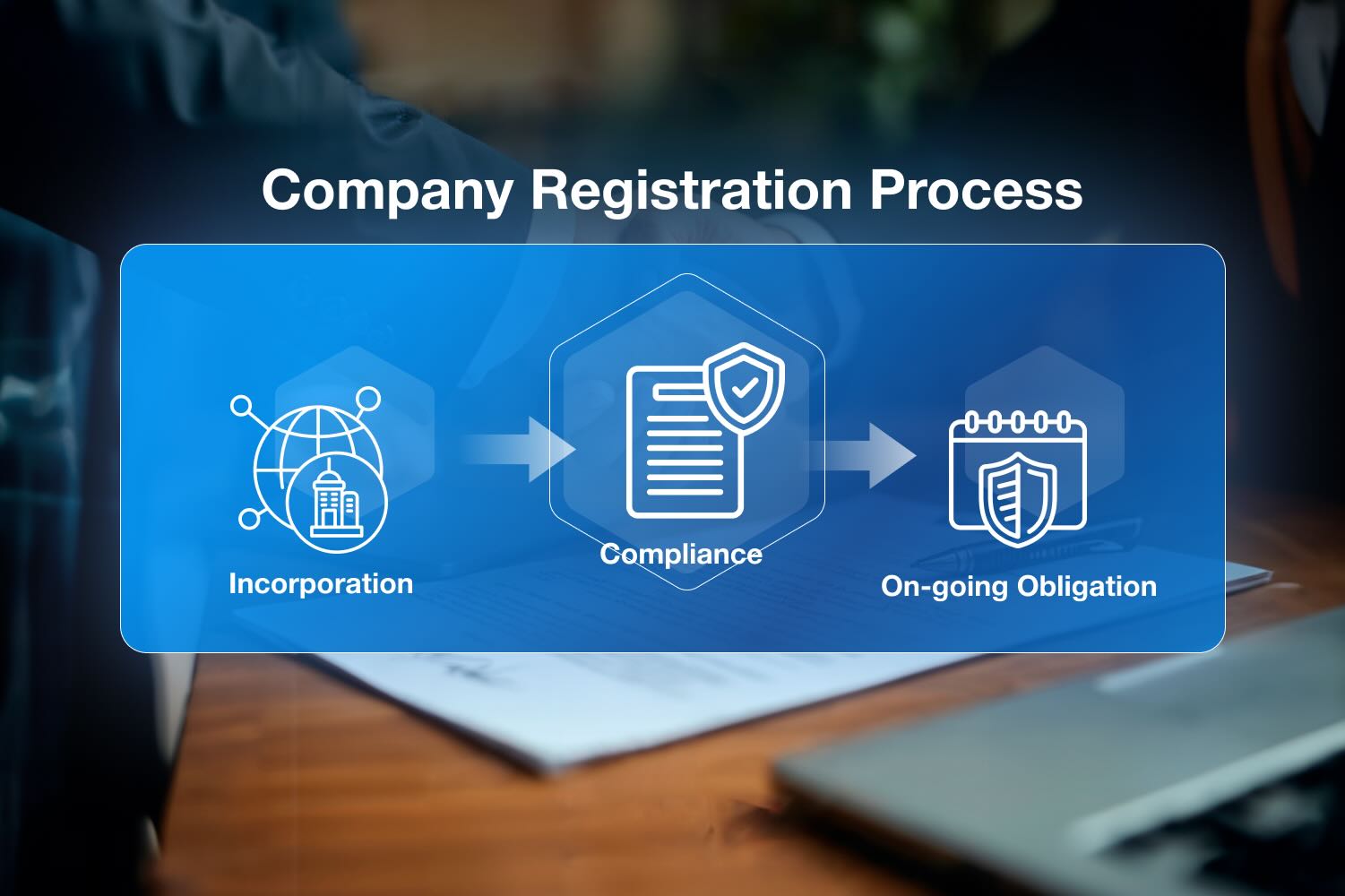
Singapore remains one of the most attractive jurisdictions in the world for starting and operating a business. Its strong regulatory framework, pro-business policies, and international credibility make it a preferred base for startups and foreign entrepreneurs.
However, company registration in Singapore is not merely an online formality. It is a legal and compliance process governed by ACRA, with ongoing statutory obligations that directors are personally responsible for. Many founders only realise this after incorporation — when deadlines are missed, requirements are misunderstood, or penalties arise.
This article explains how Singapore company incorporation works, what founders must prepare, where common mistakes occur, and how engaging the right professional support helps businesses start on a compliant and sustainable footing.
Why Singapore Is One of the Best Places in the World to Start a Business
Singapore consistently ranks highly for ease of doing business, transparency, and regulatory certainty.
Key advantages include:
- A competitive corporate tax rate of 17%, with startup and partial tax exemptions
- Strong legal and regulatory infrastructure
- Access to global markets and international banking
- High credibility with investors, banks, and business partners
These benefits, however, come with clear expectations. Incorporating in Singapore means operating within a rules-based environment where accuracy, timeliness, and governance matter from day one.
What You Need Before Registering a Company (ACRA Requirements)
Step-by-Step Guide to Company Registration in Singapore
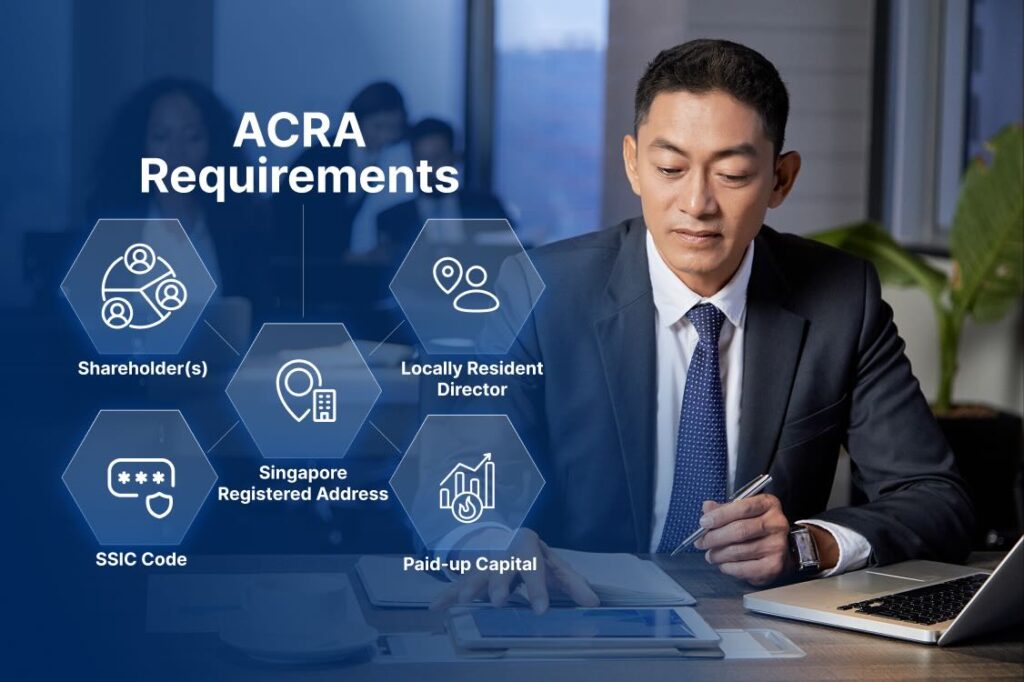
Before proceeding with ACRA company registration, several statutory requirements must be satisfied.
At a minimum, founders must have:
- At least one shareholder (individual or corporate)
- At least one locally resident director
- A registered Singapore business address
- An appropriate SSIC code reflecting the company’s business activity
- A minimum paid-up capital (commonly S$1 at incorporation)
Foreign founders often underestimate how early decisions — such as business activity classification or shareholding structure — can affect future accounting, tax, and audit obligations.
While the process to register a Pte Ltd company in Singapore can be completed quickly, proper preparation is essential.
The typical step-by-step process involves:
- Company name reservation with ACRA
- Company incorporation filing and issuance of the Unique Entity Number (UEN)
- Opening of corporate bank accounts
- Completion of post-incorporation statutory requirements, including appointments and registers
When incorporation is rushed or poorly guided, companies often end up with incorrect SSIC codes, unsuitable structures, or missed statutory appointments that require corrective filings later.
What is a register of registrable controller? Learn more about: Registrable Controller Obligations.
Yes. Under Singapore law, every company must have at least one director who is ordinarily resident in Singapore. The resident director must be a Singapore citizen, permanent resident, or employment pass holder, and must also be a fit and proper person.
For foreign founders who do not hold Singapore residency, this typically requires appointing a nominee director. This role carries legal responsibilities and should never be treated as a formality.
Professional incorporation services help ensure:
- Proper appointment and documentation
- Clear delineation of roles and responsibilities
- Compliance with ACRA and regulatory expectations
Poorly structured nominee arrangements can expose both the company and individuals to regulatory and legal risk. As a result, foreign founders who do not hold Singapore residency typically need to appoint a nominee director, a role that carries statutory duties and personal accountability under Singapore law.
See what are on: Nominee Director Requirements
Common Mistakes Made During Company Incorporation
Many compliance issues can be traced back to the incorporation stage.
Common mistakes include:
- Selecting an incorrect or overly broad SSIC code
- Appointing directors without understanding statutory duties
- Inadequate shareholding or capital structuring
- Ignoring post-incorporation filings and AGM requirements
- Assuming company registration equals ongoing compliance
As Joe Tan, Managing Partner of JDT, often explains, “many founders assume that once the company is registered, the hard part is done. In reality, incorporation is only the starting point of a company’s compliance journey.”
How Corporate Secretarial Services Make Compliance Easy
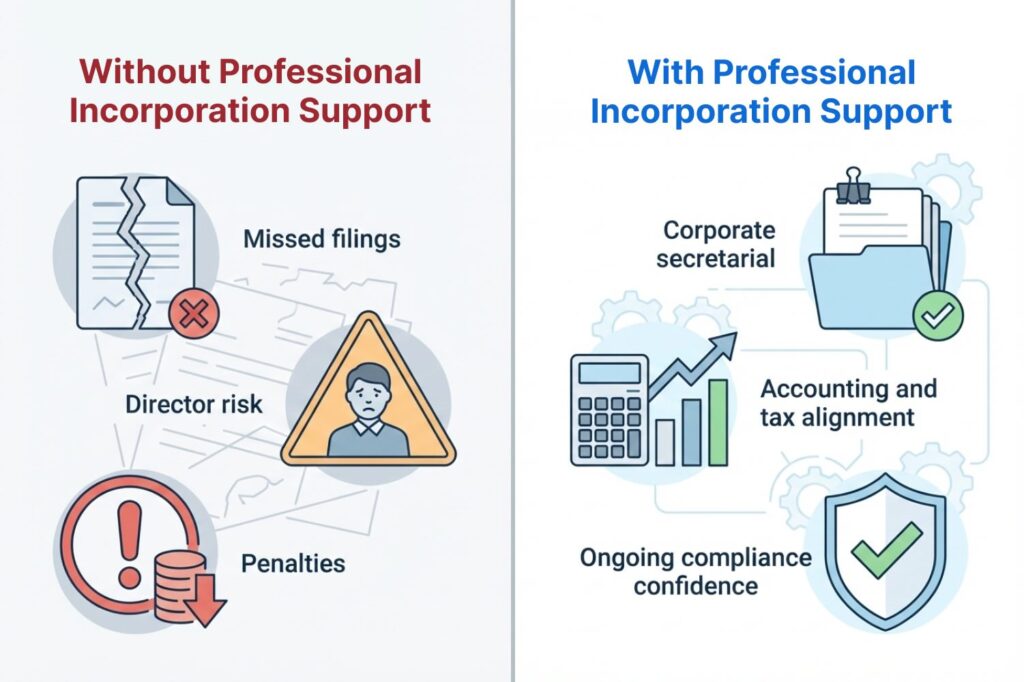
In Singapore, incorporation is only the starting point. Once a company is registered, directors remain legally responsible for ongoing compliance with ACRA requirements, even if administrative tasks are outsourced.
Corporate secretarial services in Singapore help manage these obligations in a structured and timely manner, including:
- Maintaining statutory registers and company records
- Filing annual returns with ACRA
- Tracking AGM and compliance deadlines
- Preparing resolutions and statutory filings for changes in directors, shareholders, or share capital
- Ensuring all filings are accurate, complete, and properly documented
For SMEs and foreign founders unfamiliar with Singapore’s regulatory framework, these requirements are often underestimated. Missed deadlines or incorrect filings can result in penalties or regulatory scrutiny that directors are personally accountable for.
As Preston Jansz Charles, Director of Business Advisory at JDT, notes, effective corporate secretarial support gives directors confidence that compliance obligations are being monitored and met, allowing them to focus on running the business rather than managing regulatory details.
Learn more about: corporate secretarial support
Why Accounting Matters from Day One
Decisions made during company incorporation directly affect accounting, tax, and audit obligations later.
Early clarity around:
- Business activities
- Shareholding structures
- Director and remuneration arrangements
helps ensure accurate bookkeeping, correct tax treatment, and smoother year-end reporting.
Engaging accounting services in Singapore from day one allows companies to:
- Maintain clean financial records from inception
- Avoid costly clean-up work later
- Prepare for future audits, financing, or investor reviews
Strong accounting foundations significantly reduce compliance risk as the business grows.
Explore our: accounting services
How to Choose the Right Incorporation and Corporate Secretarial Partner
Choosing an incorporation or corporate secretarial provider is not a one-off decision. The right partner supports the company beyond registration and helps directors remain compliant as the business evolves.
When evaluating a provider, founders — especially those managing foreign-owned companies — should look beyond speed and price, and consider:
- Familiarity with ACRA regulations and statutory requirements
- Experience supporting SMEs and foreign-owned companies
- Clear, practical communication on director responsibilities
- Ability to manage ongoing changes accurately and on time
- Transparent and predictable pricing
It is also important to assess whether the provider can support the business beyond incorporation. Firms with in-house accounting, tax, and audit capabilities are better positioned to anticipate compliance implications as the company grows, rather than reacting after issues arise.
As Joe Tan, Managing Partner of JDT, often advises, choosing a partner based purely on speed or cost may save time initially, but often results in compliance issues later.
See what need to prepare on: Employment Pass application

Tailored Corporate Secretarial Solutions for Your Startup
JDT supports startups, SMEs, and foreign entrepreneurs with a compliance-first approach to company incorporation in Singapore.
Clients choose JDT because of:
- Over 20 years of experience in Singapore corporate compliance
- Strong focus on SMEs and foreign-owned companies
- End-to-end support across incorporation, corporate secretarial, accounting, tax, and audit
- Clear, transparent pricing
- Practical guidance grounded in regulatory realities
Learn more about JDT and explore our corporate secretarial support. The objective is not just fast registration, but sustainable compliance from day one.
Incorporate Your Company with JDT — Fast, Simple, Compliant
If you are planning to register a company in Singapore, an early discussion can help you:
- Confirm eligibility and statutory requirements
- Structure your company correctly from the outset
- Avoid compliance gaps after incorporation
Speak to a JDT specialist to ensure your company is incorporated correctly, compliantly, and with long-term clarity so you can get started today.